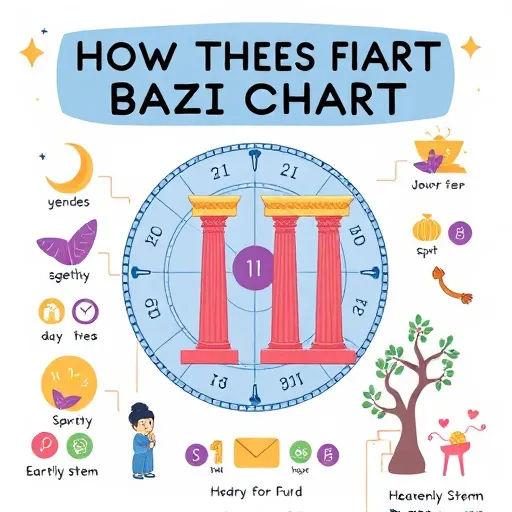
Bazi chart four pill
First Things First: What Are You Actually Looking At?
Before we get into the nitty-gritty of how to read a bazi chart for career purposes, let's strip things down to basics. A bazi chart gets built from four pillars — each one representing a year, month, day, and hour of your birth. Every pillar has a Heavenly Stem sitting on top and an Earthly Branch below it, which gives you eight characters total. Those characters map directly onto the Five Elements — Wood, Fire, Earth, Metal, and Water — and every single element carries its own flavor of energy, emotion, and work style. If you're serious about how to read a bazi chart for career insights, these eight characters are your raw material.
Here's the thing most beginners skip: before you even think about careers, you've gotta nail down two things. First, your Day Master — that's the Heavenly Stem of your birth day, and it essentially represents you, the core self. Second, the overall elemental balance of the chart. Everything else in the chart gets read in relation to your Day Master. Is it strong or weak? Does the season you were born in support it? Which elements are abundant, and which ones are missing or buried? Knowing how to read a bazi chart for career direction really starts with this foundation — skip it and the rest falls apart.
Strong vs. Weak Day Master: The Core Self and Career Environment Fit
Quick shorthand: if your Day Master is strong, you generally thrive when you're challenged, handed responsibility, and pushed to produce. If it's weak, you tend to do better with support, collaboration, and environments that don't drain you. This single insight already tells you a ton about what kind of work environment suits you — and honestly, it's the foundation for everything that follows when learning how to read a bazi chart for career strategy. Master this step and the rest of the reading gets way less confusing.
The Five Elements, Natural Work Style, and Career Temperament Basics
Each element in your chart translates into a career temperament. You don't need to memorize everything, but understanding your dominant and deficient elements gives you a surprisingly practical lens for how to read a bazi chart for career decisions. Let's break it down element by element.
Wood: The Builder, Strategist, and Long-Term Growth Planner
Wood energy is growth-oriented, visionary, and a little stubborn. People with strong Wood tend to be natural planners, entrepreneurs, and project drivers. They like to start things and watch them expand. In career terms, Wood thrives in roles involving strategy, design, education, or anything with forward momentum. Too much Wood? You might overcommit. Too little? You might struggle to follow through on long-term plans — a key detail when you're learning how to read a bazi chart for career follow-through.
Fire: The Communicator, Charisma Engine, and Visibility Magnet
Fire is visibility, passion, and expression. Strong Fire charts often belong to people who light up a room — salespeople, performers, marketers, public-facing leaders. Fire needs an audience; give it a stage and it flourishes. But Fire can burn out fast, so careers with variety and recognition keep it alive. A weak Fire chart might mean you struggle with self-promotion — worth knowing if you're in a field where visibility matters. That self-awareness is half the battle in how to read a bazi chart for career clarity.
Earth: The Stabilizer, Trust Builder, and Operations Anchor
Earth is the element of reliability, patience, and resource management. Strong Earth types are the people everyone depends on — operations leads, HR professionals, project managers, financial stewards. They build slowly but solidly. In a 2026 work landscape obsessed with rapid pivots, Earth is the anchor. If your chart is Earth-heavy, don't let anyone tell you you're "too slow" — you're playing a long game, and it usually wins. This is exactly the kind of nuance you pick up when you study how to read a bazi chart for career patience and pacing.
Metal: The Analyst, Systems Thinker, and Process Refiner
Metal is precision, structure, and discernment. Metal-dominant charts often show up in engineering, law, auditing, data analysis, and quality-focused roles. These folks like clean systems and clear standards. Metal cuts away what doesn't belong — which makes them excellent at editing, refining, and improving processes. The risk? Perfectionism. The reward? Unmatched attention to detail. Either way, it's a crucial lens for how to read a bazi chart for career accuracy in analytical fields.
Water: The Diplomat, Deep Thinker, and Adaptability Specialist
Water is adaptability, intuition, and flow. Strong Water charts belong to strategists, researchers, negotiators, and creative thinkers who work well in ambiguity. Water doesn't force — it finds the path of least resistance. In career terms, Water people often excel in consulting, writing, psychology, and international business. The challenge is focus; Water can spread too thin if it isn't channeled. Nail this element and you'll understand a huge chunk of how to read a bazi chart for career adaptability.
Reading the Ten Gods, Career Direction, and Professional Tendencies
Now we hit the really useful part: the Ten Gods (or Ten Deities). Don't let the name intimidate you — these are just relational labels that describe how elements interact with your Day Master. For how to read a bazi chart for career guidance, a handful of them matter most. Here's your cheat sheet.
- Direct Officer — structure, authority, steady employment, management tracks. If this is prominent, formal roles with clear ladders suit you.
- Seven Killings — boldness, risk, entrepreneurship, competitive fields. Strong Seven Killings charts often do well in business, law enforcement, sales, or anything requiring nerve.
- Direct Wealth — steady income, practical financial sense, asset management. Great for accounting, finance, and stable business roles.
- Indirect Wealth — opportunistic wealth, deal-making, flexible income streams. Suits freelancers, investors, and serial entrepreneurs.
- Eating God — creativity, craftsmanship, output. Writers, designers, chefs, and artisans often show this strongly.
- Hurting Officer — innovation, performance, disruption. These charts often resist rigid hierarchies and thrive in creative or independent work.
- Direct Resource — learning, mentorship, credentials. Academic and advisory roles fit well.
- Indirect Resource — unconventional learning, intuition, behind-the-scenes support. Research and specialist roles suit this energy.
Here's the key move for how to read a bazi chart for career accuracy: look at which Ten Gods appear most frequently and whether they're supported by the chart's overall balance. A chart loaded with Direct Officer energy points toward structured career paths, while a chart dominated by Hurting Officer or Seven Killings leans toward independence and disruption. Neither is "better" — they're just different operating systems. Context is everything here, and that's the heart of how to read a bazi chart for career interpretation done right.
The Month Pillar, Career Environment Clues, and Industry Resonance
If you only look at one pillar for career insight, make it the Month Pillar. In bazi, the month branch represents your environment, your industry, and how you relate to the world of work. The month stem often reflects the kind of professional energy you naturally attract. This single pillar can transform how to read a bazi chart for career questions into concrete answers.
For example, someone born in a Wood month with a Metal Day Master has a chart where the environment pushes against the self — that person often thrives in competitive, high-friction industries because the tension sharpens them. Meanwhile, a Fire Day Master born in a Fire month has reinforcement — they tend to shine in visible, expressive fields but need to manage burnout carefully. The relationship between your Day Master and your Month Pillar is one of the most practical career diagnostics you can run.
In 2026, career paths are more fluid than ever, so think of the Month Pillar not as a fixed job title but as a flavor of environment. Ask yourself: does my month energy point toward stability, creativity, competition, or service? That answer narrows your options fast — and it's a shortcut for how to read a bazi chart for career environment matching.
Identifying Useful Elements, Career Decisions, and Balance Filters
One of the most actionable bazi chart techniques for career reading is identifying your useful element (Yong Shen). This is the element that brings your chart into balance — and by extension, the type of work and environment that makes you feel most "in flow." It's the secret weapon for how to read a bazi chart for career decisions that actually stick.
If your chart is too cold (heavy Water and Metal), you likely need Fire and Wood — meaning warm, dynamic, people-facing, growth-oriented environments. If it's too hot (heavy Fire and Wood), you probably need Water and Metal — meaning cooler, analytical, structured, or strategic settings. Here's how to apply this practically:
- Identify whether your chart runs hot, cold, dry, or damp overall.
- Determine which element(s) restore balance.
- Match those elements to industries and work styles (e.g., Fire = media, sales, hospitality; Metal = tech, finance, law; Water = logistics, consulting, research).
- Use this as a filter when evaluating job offers or career pivots.
This is where bazi gets genuinely strategic. Instead of guessing whether a role "feels right," you have a framework for checking whether the environment aligns with what your chart actually needs. That's practical how to read a bazi chart for career wisdom in action.
Timing Career Moves, Luck Pillars, and Decade Cycles
Charts aren't static — they unfold through time via Luck Pillars, which are ten-year cycles that shift the elemental emphasis of your chart. This is where bazi becomes a timing tool rather than just a personality profile, and it's essential for how to read a bazi chart for career timing.
When a Luck Pillar brings in your useful element, that decade tends to feel expansive — good for launching businesses, changing industries, or stepping into leadership. When a Luck Pillar brings challenging elements, it's often a period for consolidation, skill-building, or weathering transitions. For 2026 specifically, many practitioners are looking at how the current year's energy interacts with individual Luck Pillars. The practical takeaway: don't make major career moves blindly. Check whether the current cycle supports expansion or demands patience. A little timing awareness can save you years of frustration — and it's a skill you develop as you learn how to read a bazi chart for career timing.
Common Mistakes, Reading Pitfalls, and Judgment Traps to Avoid
A few pitfalls trip people up again and again. First, don't read a single element or Ten God in isolation — bazi is a system, not a checklist. Second, don't treat "weak" or "strong" as value judgments; they're technical terms about balance, not about your worth or capability. Third, don't ignore the hour pillar — it often holds hidden influences that shift the whole reading. And perhaps most importantly: don't outsource your judgment entirely to the chart. Bazi is a lens, not a leash. It highlights tendencies and timing, but you're still the one making decisions. The most successful people using this system treat it as a strategic advisory tool — a way to ask better questions, not a script to follow blindly. Avoiding these traps is a huge part of mastering how to read a bazi chart for career responsibly.