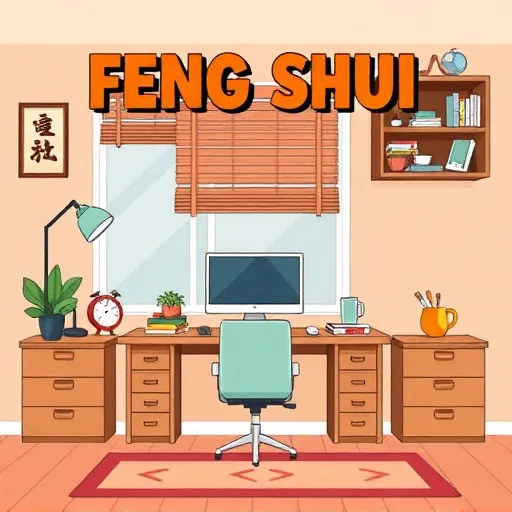
Feng shui as spatial
Why Feng Shui Still Matters for Modern Workspaces
Let's get one thing straight right off the bat: feng shui isn't some woo-woo superstition your aunt keeps bringing up at family dinners. It's actually a centuries-old spatial philosophy built around flow, balance, and intentional positioning — and modern workspace psychology basically backs up the same idea. Your environment shapes your behavior. Period. A cluttered, awkwardly placed desk creates friction all day long, while a well-organized, thoughtfully positioned one cuts down on decision fatigue and actually supports deep work. That's exactly why learning how to set up a feng shui office desk layout is still incredibly relevant in 2026.
Workplace wellness surveys from 2025 and 2026 keep telling us the same story: employees who describe their workspace as "organized and calming" report noticeably higher satisfaction and lower stress levels. That's not magic — that's design. And when you understand how to set up a feng shui office desk layout, you get a structured framework for getting there without guessing.
The Command Position and Desk Placement Rules for a Feng Shui Office Desk Layout
If you only remember one principle, make it the command position. When figuring out how to set up a feng shui office desk layout, your desk should sit so you can see the door without being directly in line with it. This gives you a sense of awareness and control — and honestly, it just feels better. Nobody enjoys sitting with their back to an entrance.
- Place your desk diagonally across from the door, not directly facing it
- Avoid having your back to the doorway — it creates a subtle sense of vulnerability
- If your room layout makes this impossible, put a small mirror on your desk so you can see behind you
- Keep a solid wall behind you rather than a window — this represents support
Small spaces make this tricky. If you're in a shared room, angle your desk toward the main entry point. A well-placed desk divider or a tall plant behind your chair can simulate that "solid backing" feeling too.
Desk Orientation and Facing Direction Choices When You Set Up a Feng Shui Office Desk Layout
Direction matters in feng shui, and each orientation carries different energy. There's no one-size-fits-all answer, but here's the general breakdown:
- Facing north: Tied to career growth and flow — great for creative or strategic roles that need clarity of thought
- Facing east: Linked to health, renewal, and new beginnings — solid for anyone starting a new job or project
- Facing south: Represents recognition and reputation — ideal for client-facing roles or personal branding
- Facing west: Tied to creativity and completion — perfect for writers, designers, and anyone wrapping up long-term projects
Don't stress if your room forces a direction. The command position and overall desk organization matter way more than compass orientation. Think of direction as a fine-tuning tool, not a dealbreaker when you're planning how to set up a feng shui office desk layout.
Decluttering Checklist and Desk Organization Before You Set Up a Feng Shui Office Desk Layout
You can't feng shui a messy desk. Seriously. Clutter is the enemy of flow — both energetic and mental. Before repositioning any furniture, do a full clear-out:
- Remove everything from the desktop surface
- Sort items into three piles: keep, relocate, discard
- Wipe down surfaces and clean your screen and keyboard
- Only return items that serve a daily purpose or bring genuine joy
- Store supplies in drawers or closed containers rather than on display
An organizer tray or drawer divider works wonders here. The goal is a clear, open surface that invites focus rather than visual noise. Productivity coaches consistently emphasize that a clean desk is the foundation of any effective workspace — feng shui or otherwise. This step alone can transform how to set up a feng shui office desk layout feels in practice.
Desk Shape, Material, and the Five Elements in a Feng Shui Office Desk Layout
In feng shui tradition, rounded and soft edges beat sharp corners. Sharp angles — often called "poison arrows" — are believed to direct harsh energy toward you. No need to replace your desk; just soften the effect:
- Position a plant or desk accessory near the corner
- Use a rounded desk mat or corner covers
- Angle your chair so the sharpest corner isn't pointing at you
As for materials, wood is the classic favorite because it represents growth and vitality — a wooden desk feels grounding. Metal desks signal efficiency and clarity, great for analytical work. Glass desks are sleek but feel "cold" energetically; warm one up with a textured desk pad or a small plant.
The five elements — wood, fire, earth, metal, and water — create balance. You don't need to go overboard. A small representation of each near your desk creates a surprisingly harmonious feel:
- Wood: A small potted plant, bamboo shoot, or wooden pen holder
- Fire: A desk lamp with warm light, a red notebook, or a battery-operated candle
- Earth: A ceramic mug, stone paperweight, or clay desk organizer
- Metal: A metal pen cup, sleek stapler, or small metal clock
- Water: A small desktop fountain or blue-toned mouse pad
Bagua Zones, Cable Management, and Digital Clutter in a Feng Shui Office Desk Layout
In the bagua framework, the left side of your desk (from your seated view) connects to career and knowledge, while the right side relates to creativity and relationships. Place your monitor slightly left of center, keep a planner on the left for goal-setting, and add something visually inspiring on the right — a picture frame or colorful desk accessory. Keep the right side a bit less structured to invite creative thinking.
Here's what most guides skip: in 2026, clutter isn't just physical. Tangled cables, overflowing browser tabs, and a chaotic desktop screen all add mental noise. Use a cable organizer or cable clip, mount your monitor on a desk mount, and clean your computer desktop weekly. An ergonomic keyboard and properly positioned monitor riser support physical comfort too — and if your body's uncomfortable, no amount of feng shui fixes your focus. This is the part of how to set up a feng shui office desk layout that people always forget.
Lighting, Plants, and Common Feng Shui Desk Mistakes to Avoid
Lighting is one of the most overlooked aspects of office feng shui. Harsh overhead fluorescents create fatigue, while natural light and warm task lighting promote calm. Position your desk to catch natural light from the side, use a desk lamp with adjustable warmth, and avoid glare on your screen. No windows? Grab a full-spectrum desk lamp that mimics daylight — your energy levels will thank you.
Plants are a feng shui staple for good reason — they soften sharp edges, add natural color, and improve air quality. Stick to small, low-maintenance picks like succulents, snake plants, pothos, or small bamboo. Skip thorny cacti directly on your desk — thorns represent conflict.
And here's what to avoid when you're thinking about how to set up a feng shui office desk layout:
- Back to the door: creates anxiety and a "caught off guard" feeling
- Desk facing a blank wall: blocks inspiration and momentum
- Clutter on the surface: disrupts focus and energy flow
- Sharp corners pointing at your body: creates tension
- Dead plants: symbolically represents stagnation
- Tangled cords and overloaded power strips: chaotic energy
- Trash bin in view: associated with draining energy — use a lidded waste bin tucked away
- Broken items: represent blocked potential
Step-by-Step Setup and Personal Touches for Your Feng Shui Office Desk Layout
Feng shui is personal — what feels balanced to one person might feel sterile to another. Add items that genuinely mean something: a picture frame, a small clock, or a journal for quick reflections. Every object should serve a purpose or bring positive feeling. If it does neither, it's clutter.
Ready to actually do this? Here's the practical sequence for how to set up a feng shui office desk layout:
- Clear everything off your desk and clean all surfaces
- Position your desk in the command position — see the door, solid wall behind you
- Place your monitor slightly left of center at eye level using a monitor stand
- Add a desk lamp for warm task lighting
- Organize supplies into a desk organizer, pen holder, and drawer divider
- Manage cables with a cable organizer or cable clip
- Add a small plant — a succulent or pothos works great
- Incorporate the five elements subtly — a ceramic mug, wooden pen holder, metal stapler, blue mouse pad, warm desk lamp
- Place a personal item — a picture frame or small meaningful object
- Do a final walkthrough — sit down and notice how it feels, then adjust
That last step matters more than any rule. Feng shui is ultimately about how a space feels. If it feels calm, clear, and supportive, you've nailed how to set up a feng shui office desk layout — and in 2026, where work and life blur more than ever, a desk that supports your mental state is a genuine advantage.