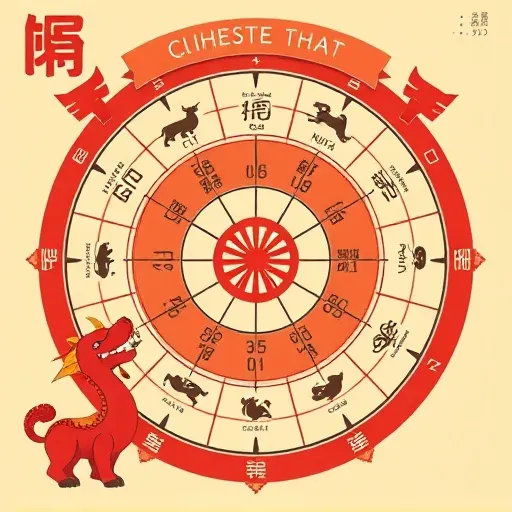
Guide to Chinese zod
What Exactly Is a Chinese Zodiac Birth Chart?
So you want to learn how to read a Chinese zodiac birth chart? Great choice — but first, let's get clear on what this thing actually is. A Chinese zodiac birth chart, often called a BaZi chart or the "Four Pillars of Destiny," is basically a snapshot of the sky at the exact moment you were born. Unlike the Western zodiac, which just looks at your birth month, the Chinese system maps your birth date and time onto a calendar built from three interlocking cycles. If you're serious about how to read a Chinese zodiac birth chart, you need to understand all three cycles, not just the animal everyone asks about at parties.
- The 12 zodiac animals — Rat, Ox, Tiger, Rabbit, Dragon, Snake, Horse, Goat, Monkey, Rooster, Dog, Pig
- The 10 Heavenly Stems, which tie into the five elements: Wood, Fire, Earth, Metal, and Water
- The 12 Earthly Branches, which correspond to the animals and to specific two-hour windows of the day
When these cycles combine, they produce a chart with four "pillars" — year, month, day, and hour — each represented by a pair of characters. That's eight characters total, which is why the system is often called BaZi (literally "eight characters"). Each character carries an element and a polarity (yin or yang), and the interplay between them is exactly what a practitioner reads. Think of it as a personality and life-path blueprint — one that's way more nuanced than just "you're a Dragon." Honestly, that's the first thing to internalize when you're figuring out how to read a Chinese zodiac birth chart: the animal is only one-eighth of the story.
Why the Exact Birth Time and Hour Pillar Matter So Much in BaZi
Here's where a lot of beginners get tripped up: your zodiac animal alone tells you almost nothing. It's like knowing someone's sun sign and nothing else. To properly understand how to read a Chinese zodiac birth chart, you need the full picture — and that means your exact birth time.
The hour pillar comes from a two-hour window in which you were born (there are 12 such windows, each tied to an Earthly Branch). If you don't know your birth time, you can still read three of the four pillars, but the hour pillar adds crucial detail about your inner world, career inclinations, and later-life trajectory. If you have access to your birth certificate or hospital records, dig them up — it's worth it.
A good Chinese zodiac chart calculator or BaZi calculator will convert your Gregorian birth date and time into the traditional lunisolar calendar automatically, so you don't have to do the math by hand. Just make sure you're using one that accounts for solar terms rather than just lunar months, since the month pillar is determined by solar position, not the moon phase. That detail trips up tons of people learning how to read a Chinese zodiac birth chart for the first time.
Breaking Down the Four Pillars: Year, Month, Day, and Hour Palaces
Let's walk through each pillar and what it represents. Reading a chart is largely about understanding what each "palace" governs, then looking at which elements and animals occupy it. This is the backbone of how to read a Chinese zodiac birth chart — skip this and nothing else makes sense.
1. The Year Pillar — Your Public Face and Social Reputation
The year pillar represents your ancestral influences, your broader social environment, and how the outside world perceives you. It's the pillar most people know because it's tied to the famous zodiac animal. Born in a Dragon year? The year pillar carries Dragon energy — but remember, that's just one-eighth of the story. In practice, the year pillar often reflects your reputation, your early childhood environment, and the general vibe you give off to strangers.
2. The Month Pillar — Your Career Path and Parental Influences
This is often considered the most important pillar in the entire chart. The month pillar governs your career path, your relationship with your parents (particularly your mother in many traditional readings), and your core working style. It's also the pillar that determines the season of your birth — which element dominates the chart overall. Someone born in the deep of winter will have a chart dominated by Water energy, while someone born in late summer leans heavily toward Earth. Understanding the seasonal strength of elements is a fundamental step in any Chinese astrology reading, and it's a huge part of how to read a Chinese zodiac birth chart accurately.
3. The Day Pillar — Your Core Self and Day Master
The day pillar is the heart of the chart. The Day Master — the Heavenly Stem sitting on top of your day pillar — represents you: your true self, your inner nature, and the element you most closely identify with. Everything else in the chart is read in relation to the Day Master. If your Day Master is, say, Yang Wood, you're associated with growth, ambition, and forward momentum. If it's Yin Metal, you might resonate with precision, refinement, and quiet strength. Practitioners spend a lot of time analyzing the Day Master's strength — whether it's "strong" or "weak" — because that determines which elements are favorable and which are challenging. When people ask how to read a Chinese zodiac birth chart, this is the piece I always tell them to nail down first.
4. The Hour Pillar — Your Inner World and Legacy
The hour pillar governs your private life, your deepest desires, your relationship with your children, and the later years of your life. It's the most "hidden" part of the chart, and it often reveals things that aren't obvious from the outside. Because the hour pillar requires an exact birth time, many people skip it — but doing so means missing a significant piece of the puzzle, and your grasp of how to read a Chinese zodiac birth chart stays incomplete.
The Five Elements and Yin-Yang Polarity: The Real Language of the Chart
If the animals are the vocabulary of a Chinese zodiac birth chart, the five elements are the grammar. Everything hinges on how Wood, Fire, Earth, Metal, and Water interact within your chart.
- Wood generates Fire, which generates Earth, which generates Metal, which generates Water, which generates Wood (the productive cycle).
- Wood controls Earth, Earth controls Water, Water controls Fire, Fire controls Metal, Metal controls Wood (the controlling cycle).
When you read a chart, you're essentially looking for balance. Is one element overwhelming? Is another completely absent? Are the elements supporting your Day Master, or draining it? A five elements analysis is often the most practical part of a reading, because it translates directly into actionable advice: which colors to wear, which directions to favor, which industries might suit you, and which years might bring friction or opportunity. This is where how to read a Chinese zodiac birth chart goes from abstract theory to genuinely useful guidance.
And don't forget yin and yang — every element exists in either a yin or yang expression. Yang is active, outward, expansive; yin is receptive, inward, contractive. A Yang Fire Day Master is bold and charismatic; a Yin Fire Day Master is warm but more subtle, like candlelight versus a bonfire. A heavily yang chart might suggest an assertive, action-oriented personality, while a predominantly yin chart points to someone more reflective and intuitive. Neither is "better" — it's about understanding your natural tendencies. Notice this balance and you're already well on your way with how to read a Chinese zodiac birth chart.
The Ten Gods, Common Beginner Mistakes, and a Simple Reading Workflow
Once you've identified your Day Master, the next layer involves the Ten Gods (also called Ten Deities) — symbolic relationships between your Day Master and the other characters in your chart. They have dramatic names like "Friend," "Rob Wealth," "Eating God," "Direct Officer," and "Seven Killings." Don't let the names intimidate you — they're just categories. Direct Resource often indicates a supportive, nurturing influence — good for learning and mentorship. Seven Killings can signal ambition, competitive drive, or challenges that forge strength. Eating God is associated with creativity, enjoyment, and expressing your talents. Reading the Ten Gods is where a chart goes from abstract to deeply personal — and it's a skill that takes real practice when learning how to read a Chinese zodiac birth chart.
Before you dive in, flag a few traps that catch almost everyone:
- Focusing only on the animal. Your zodiac animal is the headline, not the article — it's one of eight characters.
- Ignoring the solar calendar. The Chinese zodiac year starts at Lunar New Year (late January or February), so if you were born in January or early February, your animal might be from the previous year. Always double-check with a reliable converter.
- Thinking "missing element" means "bad." A missing element isn't automatically a problem — context and the strength of what is present matter more.
- Skipping the hour pillar. Without your birth time, you're reading three-quarters of the chart.
Ready to actually do this? Here's a simple workflow for how to read a Chinese zodiac birth chart:
- Gather your data: exact birth date, time, and location.
- Generate your chart: use a reputable BaZi calculator or Chinese zodiac chart calculator that converts to the solar-term-based calendar.
- Identify your Day Master: find the Heavenly Stem on your day pillar and note its element and polarity.
- Assess element balance: count how many Wood, Fire, Earth, Metal, and Water characters appear, and note which season (month pillar) dominates.
- Look at the Ten Gods: see which symbolic relationships appear most frequently.
- Cross-reference with life experience: does the reading match what you know about yourself? That's where the chart comes alive.
Start simple. Don't try to interpret everything at once. Focus first on the Day Master and the five elements — those two layers alone will teach you more about how to read a Chinese zodiac birth chart than most people ever learn from their zodiac animal. No single pillar, element, or animal defines you — the beauty of this system is that it's holistic, and it's the whole chart working together that tells the story.