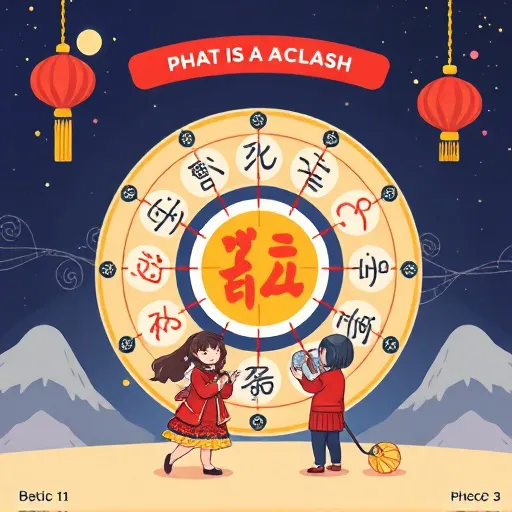
Bazi chart basics ex
The Basics: What Is a Bazi Chart, Anyway?
Before we dive into what is a clash in bazi chart territory, let's do a quick refresher on what a bazi chart actually is. Bazi — also called the Four Pillars of Destiny — is a Chinese astrology system that maps out a person's life based on their birth date and birth time. The word "bazi" literally means "eight characters," and that's exactly what you get: four pillars, each made up of a heavenly stem and an earthly branch, adding up to eight characters total. If you've ever wondered what is a clash in bazi chart, the answer starts right here with these eight little characters.
Those four pillars each carry their own meaning:
- The Year Pillar — relates to your ancestors, early childhood, and external environment
- The Month Pillar — relates to your parents, career foundation, and upbringing
- The Day Pillar — relates to you and your spouse; the day stem is your core self
- The Hour Pillar — relates to children, later life, and inner aspirations
Each pillar is also tied to one of the five elements — wood, fire, earth, metal, and water. The interactions between these elements, stems, and branches form the foundation of a bazi reading. And one of the most important interactions you'll ever learn about is the clash. So let's get into it — what is a clash in bazi chart, really?
So, What Is a Clash in a Bazi Chart, and How Do the Six Clashes Work?
Simply put, a clash happens when two earthly branches or two heavenly stems sit in direct opposition to each other. Think of it like two magnets repelling — they just can't sit comfortably next to each other. In bazi, this creates friction, movement, and sometimes disruption. When people ask what is a clash in bazi chart, this pushing-and-pulling dynamic is the heart of it.
The most common type is the earthly branch clash, also called the six clashes. Here's how they pair up:
- Rat and Horse clash
- Ox and Goat clash
- Tiger and Monkey clash
- Rabbit and Rooster clash
- Dragon and Dog clash
- Snake and Pig clash
These pairs sit directly opposite each other on the zodiac wheel, which is why they generate that push-pull energy. There are also stem clashes (like Ren versus Bing, or Geng versus Jia), but branch clashes are the ones most people talk about because they tend to have more visible effects in a chart. Understanding what is a clash in bazi chart means knowing both types exist — but the branch clashes are the headline act.
Here's the key thing to remember: a clash isn't automatically "bad." A lot of online content paints clashes as these terrifying omens, but that's a serious oversimplification. In reality, a clash is just energy in motion. It creates change, movement, and sometimes chaos — but it can also create opportunity, breakthroughs, and forward momentum. Context matters enormously when you're figuring out what is a clash in bazi chart and what it means for you.
Types of Clashes You'll See in a Bazi Chart, From Pillars to Luck Cycles
Not all clashes are created equal. Depending on where they show up in your chart, they can mean very different things. Let's walk through the main scenarios so you get a fuller picture of what is a clash in bazi chart in practice.
1. Clashes Between Two Pillars in Your Natal Bazi Chart
When two of your four pillars clash with each other, it usually points to a specific area of life where you experience friction or instability. For example:
- Year and Month clash — often relates to family dynamics, ancestral matters, or early career changes
- Month and Day clash — can indicate tension between your career and your personal life, or conflict with parents versus spouse
- Day and Hour clash — may point to challenges with children, or a disconnect between your self-identity and your inner desires
- Year and Day clash — sometimes associated with generational differences or feeling pulled between your roots and your own path
2. Clashes with the Luck Pillars and Decade Cycles
Your bazi chart isn't standalone — it interacts with luck pillars (also called decade pillars) that shift every ten years. When a luck pillar clashes with your natal chart, that decade tends to bring more movement, change, and life transitions. Somewhat ironically, these can be the most transformative — and sometimes the most exciting — periods of your life. This is a big part of what is a clash in bazi chart that beginners often miss.
3. Clashes with the Current Year and Annual Pillar
This is especially relevant right now in 2026. The annual pillar (the year's energy) can clash with your natal chart, triggering short-term events. In 2026, the year is symbolized by the Fire Horse — which means anyone with a Rat in their chart will experience a year clash (Rat clashing with Horse). If that's you, expect a year of movement, shifting priorities, and unexpected changes. It's not doom — it's dynamism. And it's a perfect real-world example of what is a clash in bazi chart energy looks like in motion.
Why Clashes Actually Matter, and What They Really Mean for Movement and Change
Okay, so we know what is a clash in bazi chart structurally. But why does anyone care? Let's talk about what clashes actually indicate in a real bazi reading.
Movement and Change
The most fundamental meaning of a clash is movement. If you're someone with a lot of clashes in your chart, you probably aren't the type to stay in one place for long. You might change careers, relocate, or shift relationship dynamics more than the average person. And that can be a beautiful thing — you're adaptable, dynamic, and restless in the best sense. This is the upside of what is a clash in bazi chart that rarely gets airtime.
Inner Conflict and Tension
On an emotional level, clashes can reflect inner tension — feeling pulled in two directions at once. A Day and Hour clash might mean you struggle between what you want and what you feel obligated to do. A Month and Day clash could reflect conflict between your career ambitions and your home life. Recognizing these patterns is often the first step to resolving them — and it's a key part of understanding what is a clash in bazi chart on a personal level.
Opportunity for Breakthrough
Here's the flip side that most people miss: clashes create openings. When two forces collide, it breaks up stagnation. Many highly successful people have significant clashes in their charts — because those clashes drove them to move, take risks, and innovate when others stayed comfortable. A clash can be exactly what pushes you out of a rut. So when someone asks what is a clash in bazi chart energy good for, this is your answer.
The Context Rule: Why a Clash Isn't Automatically Bad in a Bazi Chart
Here's where it gets technical — and honestly, where most beginners get stuck. In traditional bazi analysis, the meaning of a clash depends heavily on what the branches represent in your specific chart. This context rule is central to what is a clash in bazi chart analysis.
For instance, if a clash involves a branch that holds your wealth element, it might indicate financial fluctuation — money coming and going, rather than financial disaster. If it involves a branch representing your resource element, it could mean changes in your support system or learning environment. And if it involves a branch that's already weakened or redundant in your chart, the clash might barely matter at all.
This is why you can't just look up "Tiger and Monkey clash = bad" and treat it like a fortune cookie. A professional analysis looks at the whole picture: the elements involved, the strength of each branch, the presence of harmony combinations (which can neutralize a clash), and the timing of luck pillars. That holistic view is what truly answers what is a clash in bazi chart in any individual case.
Common Misconceptions About What Is a Clash in Bazi Chart Readings
Before we wrap up, let's clear up a few myths that circulate online about what is a clash in bazi chart and how it plays out.
- Myth 1: Any clash means disaster. False. Clashes are neutral until you examine the context. Many clashes bring positive movement and opportunity.
- Myth 2: You should avoid years with clashes. Not necessarily. Change is often productive, and you can't avoid energy shifts anyway — the better approach is to work with the movement instead of resisting it.
- Myth 3: Clashes are permanent. Also false. Your natal chart is fixed, but the way energy plays out shifts with your luck pillars, annual influences, and the personal choices you make.
- Myth 4: If you have no clashes, your chart is "better." Not at all. A chart with zero clashes can sometimes mean less movement and less dynamism. A little friction is often necessary for growth.
These myths are exactly why so many people misunderstand what is a clash in bazi chart — they've only heard the scary version.
How to Work With a Clash in Your Chart, From Grounding to Harmony Elements
If you've discovered a clash in your chart — or a year that clashes with your chart, like the Rat–Horse dynamic in 2026 — here are some practical ways to approach it:
- Embrace change. Clash years and clash periods are naturally more fluid. Instead of resisting transitions, lean into them. Relocations, new jobs, pivoting to a new skill — all fit this energy well.
- Stay grounded. Clashes can scatter your energy, so routines and stability in your personal life become even more valuable.
- Be mindful in relationships. If a clash involves your Day pillar (your spouse palace), be intentional about communication. Extra effort here pays off.
- Watch for redundancies. If a clash triggers an area of life that's already overloaded, it might be a signal to simplify — release what no longer serves you.
- Use harmony elements. In bazi, certain combinations harmonize clashing branches. A consultant can advise on which elements to favor to soften a clash's effects.
Final Thoughts: A Clash Is Just Energy in a Bazi Chart
So, what is a clash in bazi chart? It's a dynamic interaction between opposing forces — nothing more, nothing less. It's a symbol of movement, tension, and change. It can be challenging, yes, but it's also a source of growth and transformation. A chart full of clashes can describe a life full of movement and possibility.
Whether you're studying bazi for self-reflection or exploring Chinese metaphysics as a whole, understanding what is a clash in bazi chart is essential. Clashes show you where life is most active, where you're likely to feel friction, and where you have the most opportunity to evolve. In 2026, with the Fire Horse year bringing its own clash dynamics for certain signs, this knowledge is more useful than ever.
So next time you hear someone mention a clash in your chart, don't panic. Ask what's involved, where it sits, and what else is happening in the picture. Because in bazi, what is a clash in bazi chart really telling you? It's not a verdict — it's an invitation to move, grow, and engage with life more fully.